 Hacking Chinese Medicine
http://www.fastpencil.com/
Hacking Chinese Medicine is an introductory book that demystifies the vocabulary of Chinese medicine. It dispels the error accumulations of centuries of mistranslations and political alterations to this ancient medicine. This book is a must-read for any beginning student of Chinese medicine, or anyone who is mildly interested in what is meant by Yin and Yang, or Qi, or Damp. And for that matter, Lungs and Liver… which do not mean Lungs or Liver.
 Tracking the Dragon
http://www.fastpencil.com/
Tracking the Dragon is a book on advanced channel theory. channel theory is the underlying basis for acupuncture and other aspects of Chinese medicine. This book teaches how to learn to detect, by hand, the electrical currents that run just under the skin: the mysterious “channels” of Chinese medicine. This book also teaches how to build a treatment plan based on the aberrations in channel Qi that one detects. Most acupuncture treatments are a “stab in the dark.” When you learn to detect where the currents are running amiss, your acupuncture and herbal treatment become scientific – and you can instantly know if your treatments have been effective.

Yin Tui Na teaches exactly how to perform the extremely light-touch manual therapy that can gently bring a patients’ attention to a long-forgotten or dissociated injury. This book is packed with photos showing how to hold various injured body parts, Together with explicit instruction in just how much pressure to use, for how long.
This book has been picked up by many schools of therapeutic massage, is currently being translated into French, and has been translated in Hungarian.
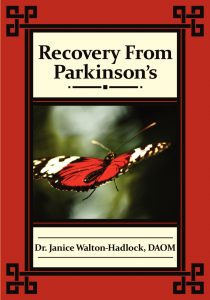 Recovery from Parkinson’s
http://www.fastpencil.com/
Recovery from Parkinson’s shares all the most current findings of the research team of the Parkinson’s Recovery Project. This book includes chapters on how to accurately diagnose what type of Parkinson’s disease a person might have (an art untaught and unknown to most neurologists), what causes the various types of Parkinson’s, and what is involved in recovering from Parkinson’s disease.